
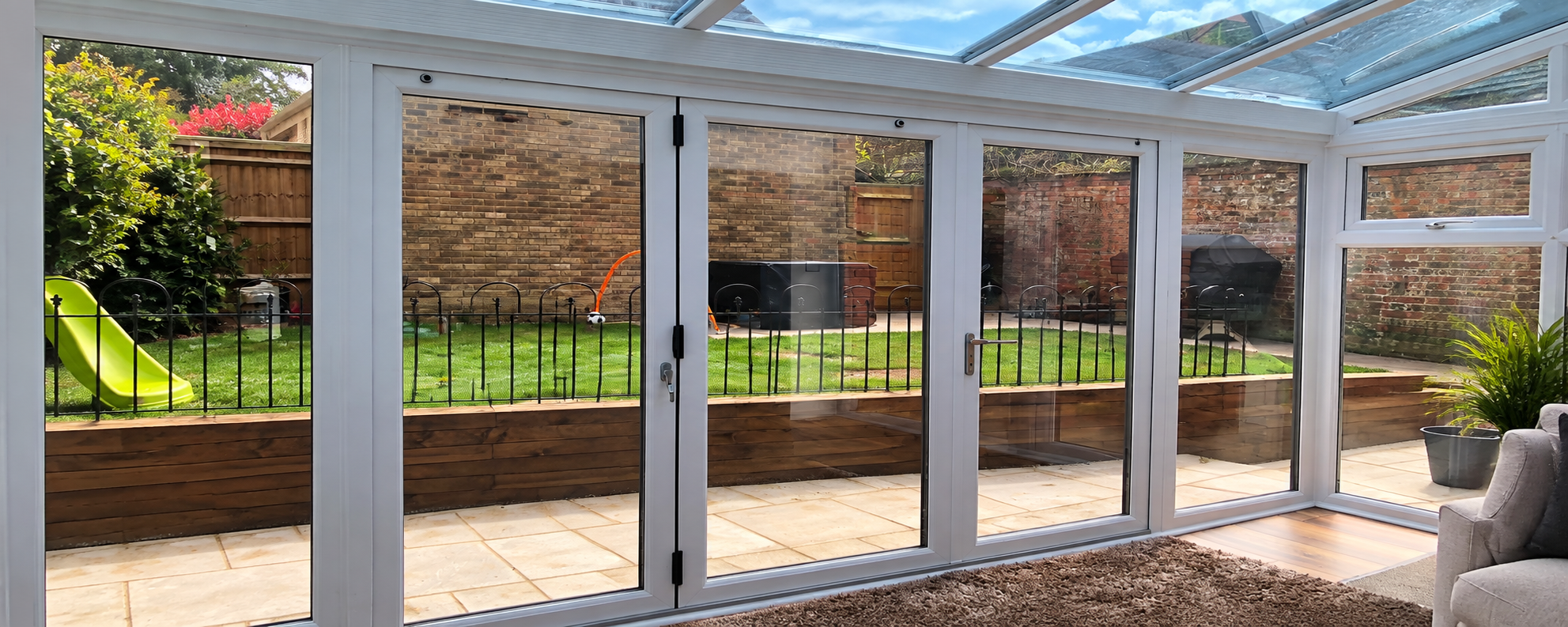
Glass is everywhere in modern buildings.
From patio doors and internal partitions to shopfronts, offices, schools and public buildings, large areas of glazing help create brighter, more open spaces.
But what happens if that glass gets broken?
Standard glass can produce dangerous fragments when shattered, creating a risk of cuts and other injuries to anyone nearby.
That’s where safety window film can provide a practical solution.
Professionally applied to suitable existing glazing, safety window film is designed to help hold broken glass together following an impact — reducing the risk posed by loose and falling shards.
How Does Safety Window Film Work?
Safety window film is applied directly to the surface of the existing glass.
Under normal conditions, a clear safety film can be extremely discreet. Its important role becomes apparent if the glass is broken.
Rather than allowing fractured pieces of glass to immediately separate and fall away, the film helps retain the broken fragments together. This principle is also used in laminated safety glazing, where an interlayer holds fractured glass in position after breakage. Pilkington
This can significantly reduce the hazard created by loose pieces of broken glass.
It’s important to remember that safety film doesn’t make glass unbreakable. Instead, it changes what happens when the glass does break.
Where Can Safety Window Film Be Used?
Safety window film has applications in both residential and commercial properties.
It can be particularly useful where people regularly come into close contact with glazing, including:
- Glazed doors and entrance areas
- Low-level windows
- Internal glass partitions
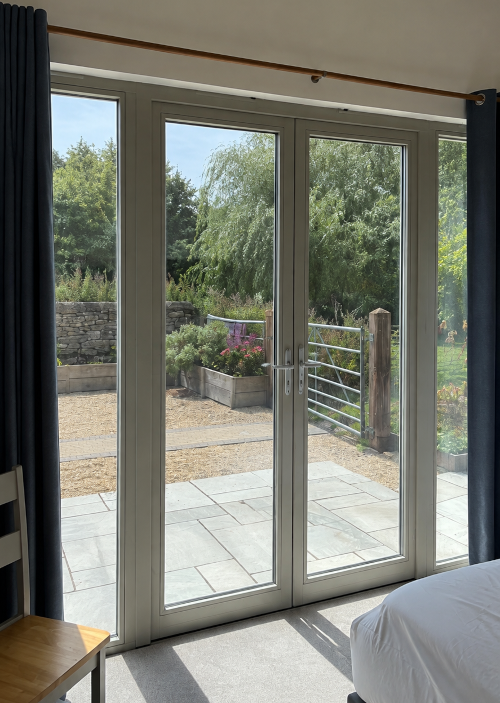
- Patio and French doors
- Offices and workplaces
- Schools and nurseries
- Shops and other commercial premises
- Public buildings and communal areas
Glass in and around doors, at low level and in other locations where accidental human impact is possible can present a particular safety consideration. Pilkington
For homeowners, it can provide additional reassurance in areas where children, older people or pets are frequently close to large areas of glass.
For businesses and organisations, it can offer a practical way of improving the safety performance of suitable existing glazing.
Can Existing Glass Be Made Safer Without Replacing It?
In suitable circumstances, yes — and that’s one of the major advantages of safety window film.
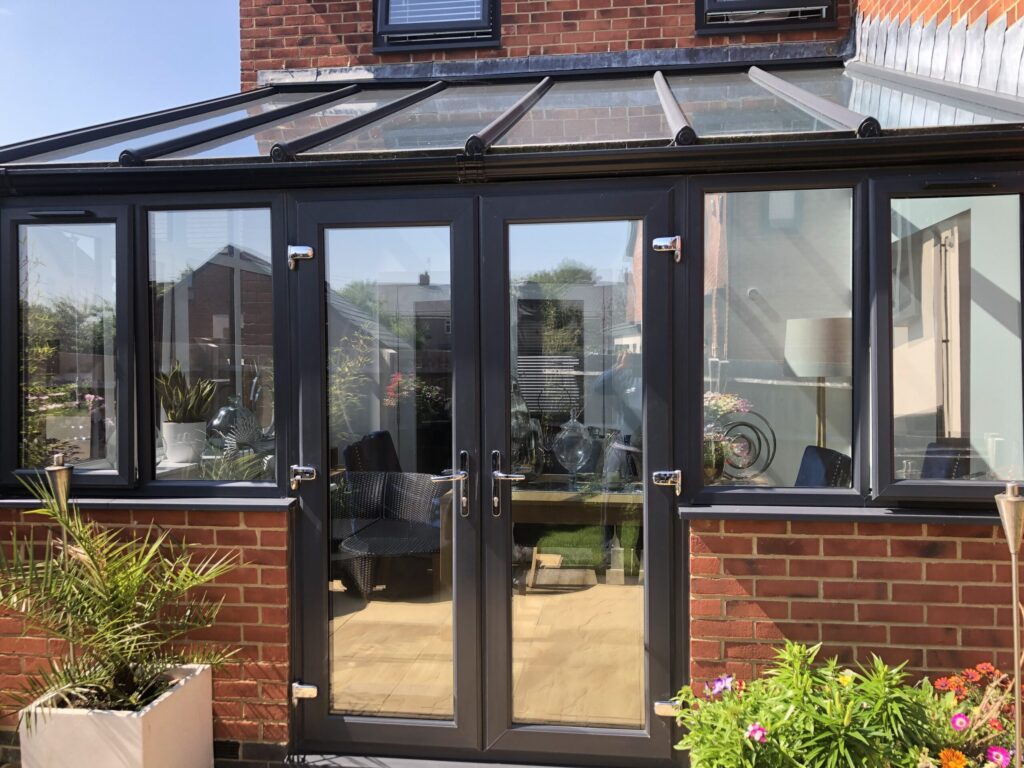
Older properties may contain glazing that doesn’t offer the same safety performance as modern safety glass.
Replacing large quantities of otherwise serviceable glazing can be expensive and disruptive.
Applying an appropriate safety film can provide a retrofit solution, improving the safety performance of existing glass without automatically having to replace the entire pane or window.
Specialist safety films are specifically marketed for upgrading suitable existing glazing to meet required safety standards. 3M
The existing glass and its location need to be assessed, however, because the correct product and installation will depend on the individual application.
What Is BS EN 12600?
You may come across BS EN 12600 when researching safety glazing.
Put simply, EN 12600 is the European standard used to test and classify flat glass according to how it performs under impact and how it behaves when broken. The classification considers both impact performance and the resulting mode of breakage. Pilkington Asset Manager
For the customer, the important point isn’t memorising the standard.
It’s making sure that where a particular safety classification is required, the complete glazing solution has been appropriately specified and tested for that application.
Shades Window Films offers safety film solutions designed to upgrade suitable glazing to meet BS EN 12600 requirements. Shades Window Films
Will Safety Window Film Change the Appearance of My Windows?
Not necessarily.
Clear safety films can maintain the appearance and natural light of existing glazing, making them particularly useful when safety needs to be improved without noticeably changing the look of the property.
That’s important in locations such as shopfronts, offices, homes and public buildings where maintaining an open, naturally lit environment may be part of the reason the glass was installed in the first place.
Different products and finishes are available, so the appropriate film will depend on both the glazing and what you’re trying to achieve.
Safety Film vs Security Film: What’s the Difference?
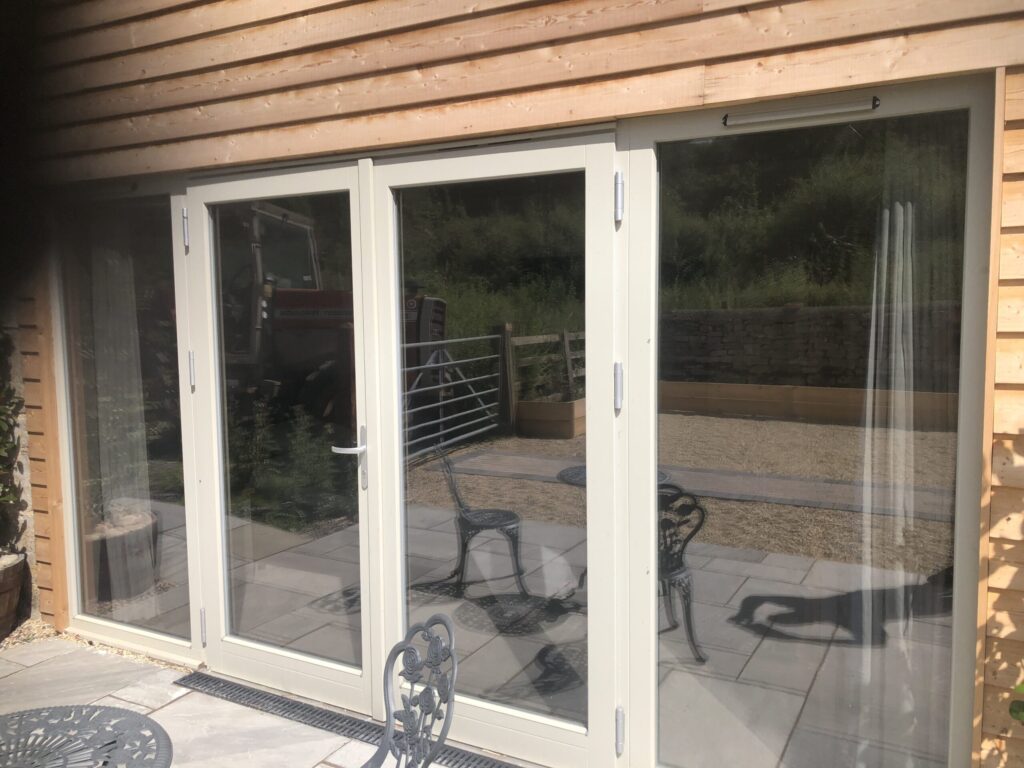
The two terms are sometimes used interchangeably because there is considerable overlap between the products.
The easiest way to understand the difference is to look at the primary purpose.
Safety window film is primarily concerned with reducing the risk of injury from broken glass by helping hold the fragments together.
Security window film generally places greater emphasis on increasing resistance to intrusion and making penetration through damaged glazing more difficult.
A safety film can therefore provide some additional security benefits — something Shades also notes on its existing safety-film page — but if protection against deliberate attack or forced entry is the main objective, a dedicated security solution may be more appropriate. Shades Window Films
That’s why understanding the problem you’re trying to solve should always come before choosing the film.
Other Benefits of Safety Window Film
Depending on the particular product specified, safety films can provide additional benefits alongside their primary safety function.
These can include:
- UV reduction
- A scratch-resistant surface
- Additional shatter resistance
- Minimal impact on natural daylight
- An additional degree of protection against intrusion
Shades Window Films’ current safety-film range includes UV reduction and scratch-resistant properties alongside its shatter-resistance benefits. Shades Window Films
Choosing the Right Safety Film for Your Glazing
As with the other types of window film we’ve discussed, there isn’t one product that’s right for every pane of glass.
The existing glazing, its size and location, how the area is used and the required level of safety performance all need to be considered.
Professional assessment is therefore important — particularly where the installation is intended to achieve a particular safety classification.
Shades Window Films has more than 20 years’ experience working with specialist window films and can assess existing glazing before recommending an appropriate solution. Shades Window Films
Could Your Existing Glazing Be Made Safer?
We often don’t think about the potential danger of glass until something goes wrong.
Safety window film provides a discreet way to improve the performance of suitable existing glazing by helping to hold broken glass together and reducing the risk of injury from dangerous fragments.
And because it can be retrofitted to existing glass, improving glazing safety doesn’t necessarily mean replacing your windows.
If you’re concerned about the safety of glazing in your home, workplace or commercial property, contact Shades Window Films for a free consultation and advice on the most appropriate solution.